



Home Security Camera Privacy Concerns in 2026: What Houston Businesses Should Do Instead
Two national stories are putting home security camera privacy back in the spotlight: a Ring Super Bowl ad that triggered “surveillance state” backlash, and reporting around Google Nest footage tied to the Nancy Guthrie case that raised questions about how consumer camera video is stored and retrieved.
If you run a warehouse, office, medical facility, manufacturing plant, or manage active construction sites in Houston, here’s the key takeaway:
Consumer “smart home” cameras are built for convenience — not for commercial security governance (data control, access rules, retention policy, and accountability).
This post breaks down what happened, what it means, and how to protect your business with professional, commercial-grade security systems.













Security Expert Tip: You can regulate who has access to your facilities with the use of access control technology, which will simplify your life and give you more control with less effort. There is undoubtedly software or access control technology available to make access control simple and safe for your self storage business, including Bluetooth access controls, card scanners, gate codes provided automatically by your self storage software, and more.
What Happened With Ring and Nest – Home Security Camera Privacy
Ring’s Super Bowl ad and surveillance backlash
Ring aired a Super Bowl commercial featuring a feature often described as using neighborhood camera networks and AI to help locate a lost dog, which sparked major criticism from privacy advocates and lawmakers worried about normalization of mass surveillance.
Around the same news cycle, Ring ended a planned partnership with surveillance tech firm Flock Safety after public scrutiny intensified (Ring said the integration never launched and no videos were shared).
The Nancy Guthrie case and questions about stored video
The ABC13 piece also highlighted concerns after Google Nest footage connected to the Nancy Guthrie case became part of public discussion — reigniting questions about where video lives (local vs cloud), and what “inactive” devices or accounts may still retain.
Why This Matters for Commercial Properties
Here’s the practical problem: many businesses start with consumer cameras because they’re easy — then discover gaps when it actually matters (incident response, liability, investigations, HR, compliance, and vendor access).
Commercial environments require:
-
Clear rules for who can view video (and when)
-
Defined retention policy (how long you keep footage)
-
Controlled sharing workflows (legal requests, HR events, incident reporting)
-
Stable storage and uptime
-
Cybersecurity basics (strong passwords, role-based access, network segmentation)
Consumer systems often blur those lines because they’re designed around “owner convenience” and cloud-first storage.
Consumer Cameras vs Commercial Security Systems
1) Video retention and storage control
Commercial systems let you choose the right storage model:
-
On-prem NVR/VMS for tight control
-
Hybrid cloud where appropriate
-
Policies based on site risk (30/60/90+ days retention)
What to do: If your business could face disputes, theft, or claims, you need a documented retention policy and storage plan.
Want to learn more?: Commercial Security Systems in Houston
2) Role-based access
In commercial settings, not everyone should have the same permissions. You want:
-
Admin vs manager vs viewer roles
-
Audit logs
-
Account offboarding procedures
Want to learn more?: Brivo Access Control Systems
3) Scalable coverage for warehouses and industrial sites
Warehouses need coverage for:
-
Loading docks
-
Roll-up doors
-
High-value aisles
-
Perimeter/fence lines
-
Fleet yards
Want to learn more?: Warehouse Security Systems
4) Construction site reality: power + theft + mobility
Construction sites don’t behave like fixed properties. You need:
-
Rapid deployment
-
No trenching
-
Stable connectivity
-
Deterrence + documentation
Want to learn more?: Solar Surveillance Trailers in Houston
Access Your Office with Smartphone
Discover why thousands of companies have Access Control System

A Practical Security Checklist for Houston Businesses
Use this to evaluate any camera/security vendor (or your current setup):
-
Retention: Do we have a defined retention period (30/60/90 days)?
-
Storage: Where does video live (local, cloud, hybrid)?
-
Permissions: Do we have role-based access and audit logs?
-
Cyber hygiene: MFA enabled? Separate network/VLAN for cameras?
-
Incident process: Who exports video, how, and where is it stored?
-
Access control: Are doors and credentials centrally managed?
-
Construction security: Do we have a deployable option for jobsites?
If you can’t answer these in 2 minutes, your security system isn’t truly “commercial-grade.”
What Panoptic Surveillance Recommends
If you’re currently relying on consumer cameras for a business property, the upgrade path usually looks like this:
-
Phase 1: Replace critical coverage areas with commercial cameras + proper recording
-
Phase 2: Add access control where liability and accountability matter most
-
Phase 3: Expand into warehouses/yards and unify visibility under one system
-
Phase 4: Deploy solar trailers for active jobsites and temporary risk zones
This approach reduces risk without ripping everything out at once.
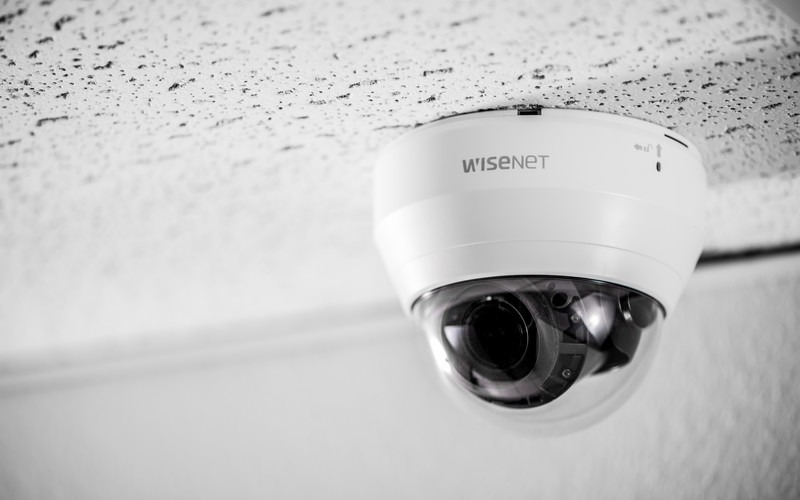
Commercial security cameras for business
- Business security cameras with enhanced coverage and IR that improve situational awareness
- Video analytics with AI to find incidents
- Hours of video are easily sorted through by Video Search to locate a suspicious person or vehicle.
- Integrates with third-party ONVIF® compliant platforms
Frequently Asked Questions
Are Ring or Nest cameras bad?
They can be fine for residential convenience. The concern is when businesses use consumer tools where they need commercial governance and control — especially amid ongoing public scrutiny about privacy and surveillance.
What’s the best option for a warehouse in Houston?
A commercial-grade camera system with proper retention, role-based access, and coverage designed for docks, perimeter, and yard areas.
How do solar surveillance trailers help construction sites?
They provide rapid deployment security without trenching or permanent power, while creating a visible deterrent and documentation for incidents.
Can you design a system that fits our site and budget?
Yes — an on-site assessment determines risk points, camera placement, storage needs, and access control requirements.
Don’t risk legal
responsibilities.
Contact us right now to set up a consultation with one of our qualified security consultants. We will assist you in seamlessly navigating the complicated terrain of video surveillance laws. Your company deserves the greatest protection possible!
Ready for a Commercial Security Assessment?
If you’re a Houston-area business and you want security you control (not consumer cloud “convenience”), we’ll map out the right solution for your property or jobsite.
Request a Commercial Security Assessment
-
Warehouse & industrial camera systems
-
Brivo access control installations
-
Solar surveillance trailers for construction sites

Now's The Time.
Discover how to make your property the destination tenants are looking for.
By providing my email address and phone number, I agree to receive email communications as well as phone sales calls from a representative on behalf of Panoptic Surveillance regarding its products and services.








One Comment